Does Swift microwave therapy work for plantar warts?
Swift microwave therapy can help some plantar warts clear, including warts that have persisted after other treatments. It does not work for everyone, and no treatment can guarantee that a wart will disappear or stay away.
If a wart is painful, spreading or still there after months of treatment, a podiatry assessment can help you decide what to try next.
At Podiatry Care Gawler, we offer Swift microwave wart therapy. We assess the area first, discuss your previous treatments and explain whether Swift or another option may suit you.
What is a plantar wart?
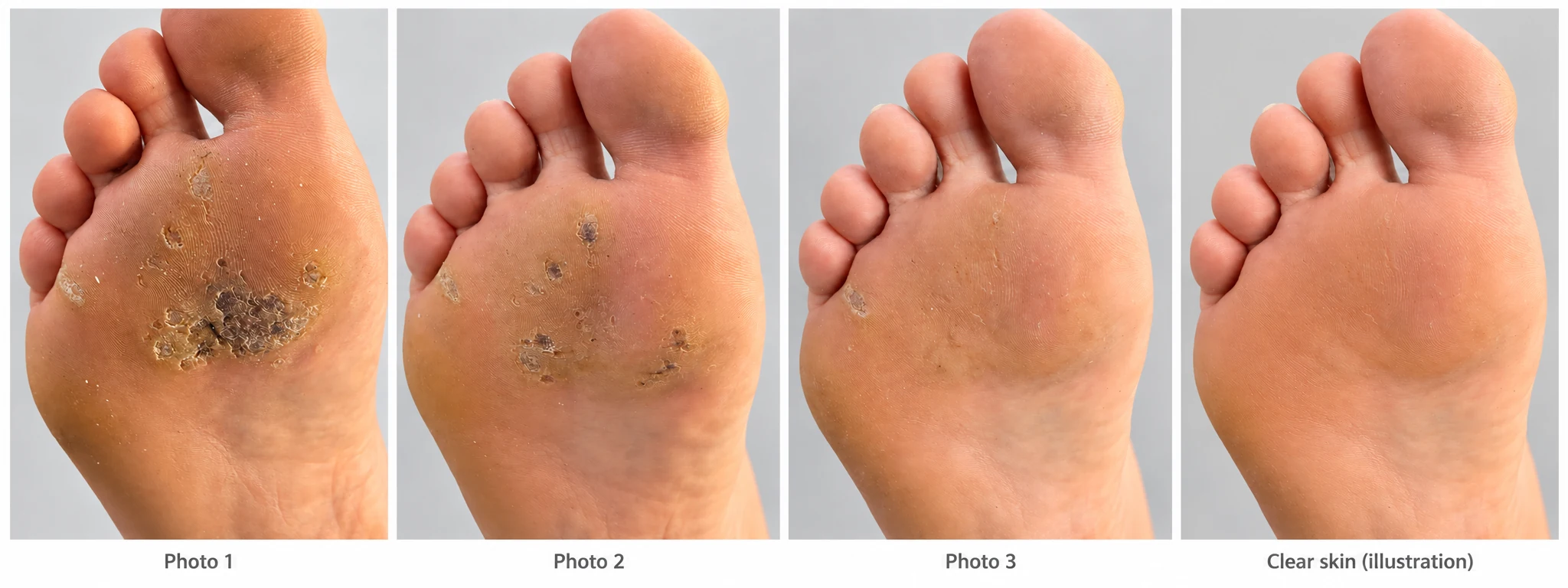
A plantar wart is a small growth on the sole of the foot caused by human papillomavirus (HPV). It may look like a patch of hard skin with tiny dark dots. Pressure from standing and walking can make it uncomfortable.
Warts can look similar to corns and calluses. If you are unsure what the area is, have it checked before treating it at home.
Some warts disappear without treatment, although this can take months or years. A painless wart may only need monitoring. Pain, spreading or difficulty walking are reasons to discuss treatment.
How does Swift microwave therapy work?
Swift uses a small handheld applicator to deliver controlled microwave energy directly to the wart. Each application produces a brief burst of localised heat.
The treatment is intended to stimulate an immune response against the virus in the affected skin. It does not involve freezing the wart or surgically cutting it out.
The wart is not expected to disappear at the appointment. Changes can develop gradually over the weeks following treatment, which is why reviews are part of the plan.
How effective is Swift for persistent plantar warts?
Research has reported clearance of plantar warts after microwave therapy, but results differ between studies. The people treated, the number of sessions and the follow-up period all affect how results should be interpreted.
A retrospective clinical review reported higher clearance than a small placebo-controlled trial of resistant plantar warts. These studies used different methods and do not provide a reliable success percentage for an individual patient.
Swift may be an option when a wart has not responded to salicylic acid or freezing. However, current evidence does not establish that it is the best treatment for every wart or every patient.
Your podiatrist will discuss the likely benefits, discomfort, cost and alternatives. If the wart does not improve, the diagnosis and treatment plan should be reviewed.
What happens at a Swift appointment?
- Assessment: your podiatrist checks the skin, confirms whether it appears to be a wart and asks about your medical history and previous treatments.
- Treatment planning: you discuss suitable options, the expected discomfort, likely appointment schedule and fees before proceeding.
- Short applications: if Swift is appropriate, the applicator is placed against the wart for brief treatments. The settings and number of applications are selected by your podiatrist.
- Review: the wart is monitored over time, and the plan is adjusted according to its response.
Does Swift treatment hurt?
Swift can cause a brief, sharp heat sensation during each application. Some people find this quite uncomfortable. The sensation usually settles quickly, but tolerance varies and some soreness can occur afterwards.
Tell your podiatrist if you are concerned about discomfort. Treatment should be discussed and planned around what you can tolerate.
How many sessions will you need?
A course commonly involves three to four appointments, often around four weeks apart. The number and timing depend on the wart, your response and your podiatrist’s assessment.
A later review may be needed because improvement can continue after the final treatment. Ask about the full course and review schedule before you begin.
Have a wart that keeps coming back? An assessment can help confirm the diagnosis and explain your options.
Swift, freezing or salicylic acid: which treatment suits you?
There is no single approach that suits every plantar wart. The location, pain, previous treatment, your health and your preferences all matter.
| Option | What it involves | What to consider |
|---|---|---|
| Monitoring | Observation without active treatment. | May suit a painless wart. Clearance can take months or years. |
| Salicylic acid | A topical product applied according to its instructions. | Usually needs repeated applications and can irritate healthy skin. Ask for advice if you have diabetes or reduced sensation. |
| Cryotherapy | A clinician freezes the wart. | Several sessions may be needed. Treatment can hurt and may cause blistering or soreness. |
| Swift microwave therapy | Brief applications of controlled microwave energy at the clinic. | Can cause short heat discomfort. A course of appointments and review is usually needed; clearance is not guaranteed. |
Your podiatrist can explain the options relevant to your foot. A comparison of practical differences is more useful than assuming that a higher price or a newer treatment guarantees a better result.
Aftercare and returning to everyday activity
Dressings are not routinely needed after Swift treatment, and many people return to their usual activity straight away. Your podiatrist will advise you if the skin needs protection or activity should be modified.
If the area feels sore, choose comfortable footwear and adjust activity as advised. Contact the clinic if pain is persistent, worsening or the skin changes unexpectedly.
Help reduce the chance of spreading warts
- Avoid picking, scratching or cutting the wart.
- Wash your hands after touching the affected area.
- Do not share towels, socks or shoes.
- Wear footwear in communal showers and changing rooms.
- Cover the wart with a waterproof plaster when swimming.
Do not add acids or other wart treatments between appointments unless your podiatrist recommends them.
Who should seek advice before treating a wart?
Get advice before using home wart treatments if you have diabetes, reduced sensation, poor circulation or a condition that affects your immune system. These factors also need to be considered when planning clinic treatment.
Our diabetes foot care service can help assess skin, circulation and sensation when diabetes affects your foot care needs.
Arrange a medical assessment if a growth bleeds, changes in appearance, becomes increasingly painful or does not look like a typical wart. A changing skin lesion should not simply be assumed to be a wart.
What does Swift treatment cost in Gawler?
The total cost depends on the assessment, the number of treatments and any review appointments. Ask Podiatry Care Gawler for current fees and what is included before starting a course.
If you have private health insurance, check any podiatry cover, limits and claim requirements with your insurer. A rebate should not be assumed.
Common questions about Swift wart therapy
Allow time for the response
Some warts may respond sooner than others, but a single appointment cannot be expected to clear the wart. A planned course and later review are commonly needed.
Activity after treatment
Many people can walk and return to usual activity straight away. If the area is sore, follow your podiatrist’s advice about footwear and activity. Persistent or worsening pain needs review.
Assess suitability and comfort
Swift is used for some children, but it is not automatically the right option. Your podiatrist will consider the wart, the child’s age, their ability to tolerate treatment and whether observation or another approach would be more suitable.
Recurrence is possible
Yes. A wart may persist or return after any treatment, including Swift. If the area reappears or changes, have it reassessed rather than assuming the same treatment is needed again.
Book a plantar wart assessment in Gawler
Get a clear diagnosis and a treatment plan that suits you. We can assess a painful or persistent plantar wart and discuss whether Swift microwave therapy is appropriate.
Podiatry Care Gawler welcomes patients from Gawler, Evanston, Willaston, Hewett and surrounding northern Adelaide communities. Bring details of any wart treatments you have already tried.
This article provides general information and does not replace an individual medical or podiatry assessment.