
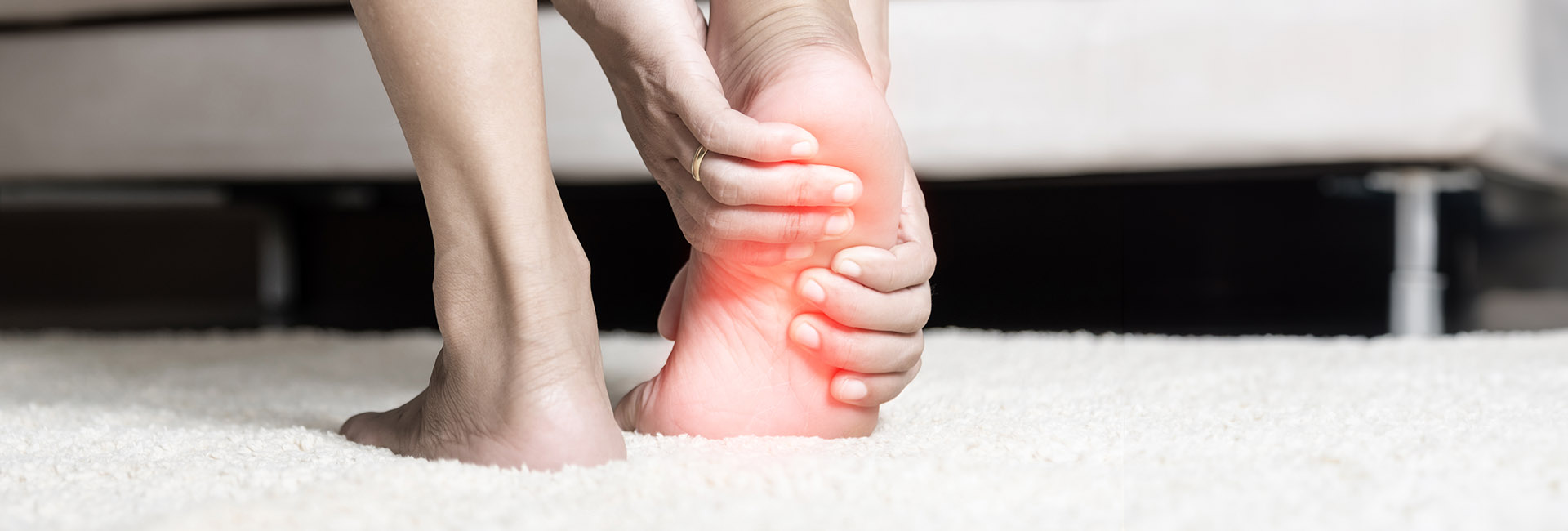
Heel pain can become frustrating when it keeps returning despite stretching, changing shoes, reducing activity or trying other treatments. A common pattern is pain underneath the heel that feels particularly sharp with the first few steps in the morning or after sitting for a while. For some people, the discomfort settles relatively quickly. For others, plantar heel pain can persist for months and start affecting walking, exercise, work and everyday activities.
When heel pain does not improve as expected, your podiatrist may consider shockwave therapy as one treatment option. At Podiatry Care Gawler, shockwave therapy is available as part of our assessment and treatment options for suitable foot and ankle conditions, including persistent plantar heel pain.
What is plantar fasciitis?
The plantar fascia is a strong band of connective tissue that runs along the bottom of the foot from the heel towards the toes. It plays an important role in supporting the foot and managing forces as you stand, walk and run. Plantar fasciitis is a commonly used term for pain arising around the plantar fascia, particularly where it attaches near the heel.
Symptoms often include:
- Pain underneath or around the heel
- Pain with the first few steps in the morning
- Pain after sitting or resting
- Discomfort after prolonged standing or walking
- Pain during or after increased physical activity
However, not every case of heel pain is plantar fasciitis. Heel pain can have several causes, which is why identifying the underlying problem is important before starting treatments such as shockwave therapy.
What is shockwave therapy?
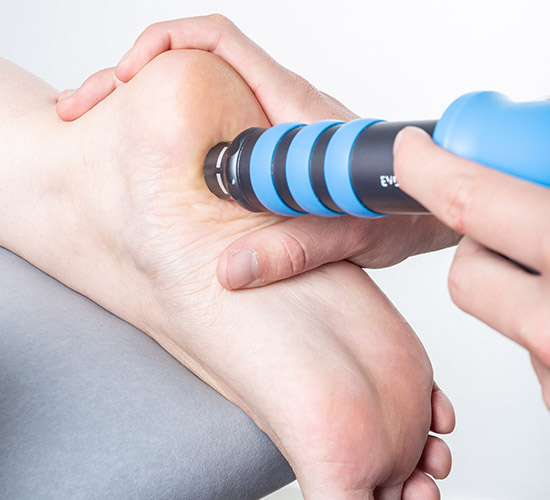
Extracorporeal shockwave therapy (ESWT), or shockwave therapy, directs acoustic pressure waves into the treatment area. It is a non-invasive treatment, meaning there are no injections or surgical incisions involved.
Clinicians commonly use shockwave therapy for persistent tendon and soft-tissue conditions. For plantar heel pain, they usually target the painful area around the plantar fascia and surrounding tissues.
The aim is not simply to temporarily numb the pain. Shockwave therapy is thought to stimulate biological responses within the treated tissue that may assist with pain reduction and recovery.
Does shockwave therapy work for plantar fasciitis?
Research suggests that shockwave therapy can help reduce pain and improve function in some people with persistent plantar heel pain. It is important, however, to have realistic expectations. Shockwave therapy does not work for every patient, and it should not be viewed as an instant cure for heel pain.
Its effectiveness can depend on factors including:
- How long the heel pain has been present
- The underlying diagnosis
- Activity and loading levels
- Footwear
- Foot and ankle function
- Other health conditions
- Previous treatments
- Whether your treatment plan also addresses contributing factors
For this reason, we generally view shockwave therapy as one part of a broader treatment plan rather than a treatment used in isolation.
When might shockwave therapy be considered?
Shockwave therapy may be considered when plantar heel pain has persisted despite an appropriate period of conservative treatment. Before progressing to shockwave therapy, treatment may have included strategies such as:
- Activity or load modification
- Footwear changes
- Stretching or strengthening exercises
- Rehabilitation
- Taping
- Prefabricated or custom foot orthoses when appropriate
- Addressing contributing foot and ankle mechanics
The appropriate treatment plan will differ from person to person. Some patients may benefit from shockwave therapy relatively early in their management, while others may respond well to simpler measures without needing it. Your podiatrist should base the decision on your assessment rather than the duration of your symptoms alone.
What happens during shockwave treatment?
During treatment, your podiatrist places a handheld applicator against the skin over the treatment area. The applicator delivers acoustic pressure waves into the targeted tissue. Patients often describe the sensation as repeated tapping or pulsing. Treatment can feel uncomfortable over sensitive areas, particularly around the most painful part of the heel. Your podiatrist can usually adjust the intensity to suit your tolerance.
The actual shockwave component of the appointment is generally relatively short. Your podiatrist may also reassess your symptoms and discuss rehabilitation, footwear, activity levels or other parts of your treatment plan during your appointment.
How many shockwave sessions will I need?
There is no single treatment schedule that is appropriate for everyone. A course of several sessions is commonly used, with the number and spacing of treatments depending on the condition, how long symptoms have been present and how you respond.
Your podiatrist should review your progress during treatment before recommending further sessions. At Podiatry Care Gawler, we assess your response and determine whether continuing shockwave therapy remains appropriate.
How quickly does shockwave therapy work?
Shockwave therapy is not necessarily designed to give immediate pain relief after the first session. Some people notice improvement relatively early, while others may experience gradual changes over the following weeks. Because persistent plantar heel pain can take time to improve, treatment progress should be considered alongside changes in function.
For example, you may notice that:
- Morning pain becomes less intense
- You can walk further before symptoms begin
- Standing becomes more comfortable
- Exercise becomes easier
- Pain settles more quickly after activity
These functional improvements can be just as important as a single pain score.
Is shockwave therapy painful?
Shockwave treatment can be uncomfortable, particularly when the applicator passes over the most sensitive area. However, your podiatrist can usually adjust the treatment intensity. Most patients can tolerate the treatment.
Mild tenderness, redness or temporary soreness around the treated area can occur following a session. Your podiatrist will discuss what to expect and whether any activity modifications are appropriate afterwards.
Can I walk after shockwave therapy?
In many cases, patients can continue normal walking after treatment. However, the advice will depend on your condition, symptoms and activity levels.
Shockwave therapy does not replace sensible load management. If repeatedly overloading the painful tissue is contributing to your heel pain, your podiatrist may recommend temporarily modifying certain activities while treatment progresses.
Is shockwave therapy safe?
Shockwave therapy is non-invasive and is generally well tolerated when used appropriately. However, it is not suitable for everyone. Certain health conditions, medications and problems affecting the treatment area may influence whether shockwave therapy is appropriate.
This is one reason we recommend a clinical assessment before treatment. Your podiatrist may need to consider your medical history, medications, circulation, sensation and the condition of the treatment area.
Find out whether shockwave therapy is right for you
If heel pain keeps returning despite stretching, footwear changes or other treatment, an assessment can help clarify your next step. We will review your symptoms, previous treatments and medical history to determine whether shockwave therapy is appropriate.
Is shockwave therapy better than orthotics or exercises?
This is not necessarily an either-or decision. Shockwave therapy, exercises, footwear changes, load management and foot orthoses address different aspects of plantar heel pain.
For some patients, changing footwear and modifying activity may be enough. Others may benefit from rehabilitation or orthotic therapy. For persistent cases, shockwave therapy may be added to the treatment plan. The goal is to determine which combination of treatments makes sense for your individual presentation rather than simply adding more treatments.
Do I need orthotics if I have plantar fasciitis?
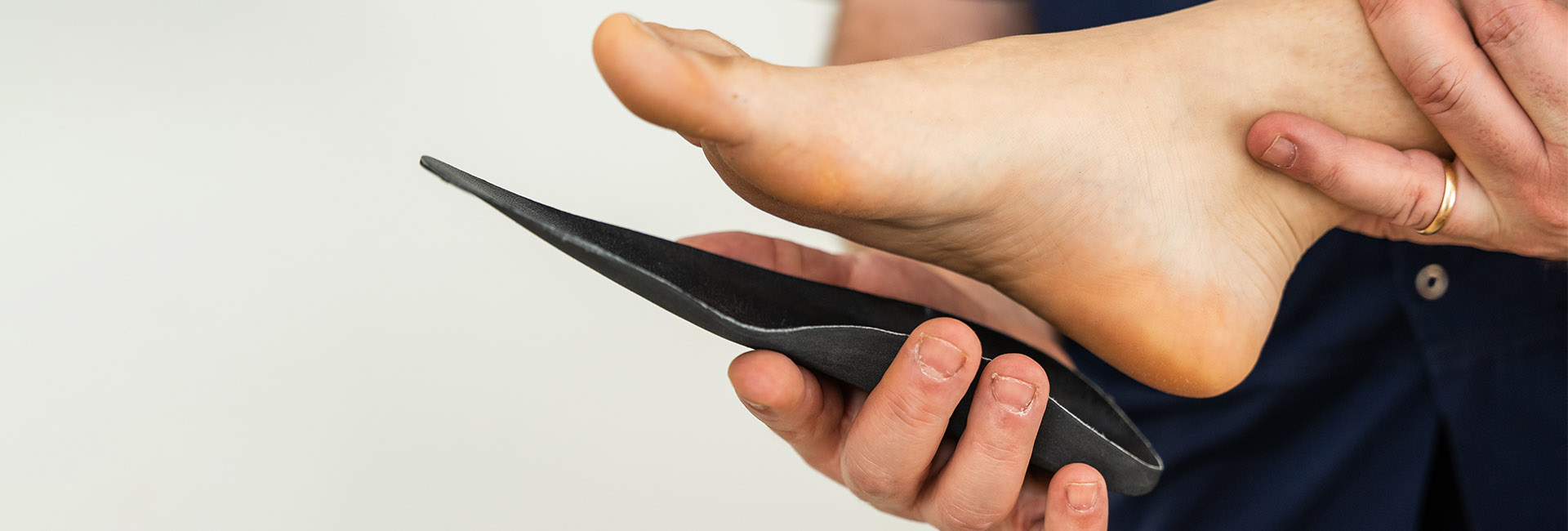
Not everyone with plantar heel pain needs orthotics. Foot orthoses may be considered when altering pressure, load or foot function is likely to help the individual patient.
We assess factors such as:
- Foot posture and movement
- Ankle mobility
- Footwear
- Activity demands
- Areas of pressure or loading
- Your symptoms and clinical examination
When orthoses are appropriate, your podiatrist may consider both prefabricated and custom options.
Will shockwave permanently cure plantar fasciitis?
No treatment can guarantee that plantar heel pain will never return. Shockwave therapy may help reduce symptoms in suitable patients, but long-term management can also depend on addressing the factors contributing to the problem. That may include footwear, activity levels, strength, mobility, training load or foot mechanics.
Our aim is not simply to treat the painful area. We want to understand why your heel is painful and build a treatment plan around what we find.
What if shockwave therapy does not work?
If you do not improve as expected, your podiatrist should reassess the diagnosis and treatment plan. Persistent heel pain may sometimes involve other structures or conditions.
Rather than simply continuing the same treatment indefinitely, your podiatrist may reconsider:
- The original diagnosis
- Your rehabilitation programme
- Footwear
- Activity levels
- Orthotic therapy
- Whether further investigation is appropriate
- Other treatment options
This is why ongoing clinical review is important.
How much does shockwave therapy cost?
Treatment costs can vary depending on the assessment and treatment plan required. Rather than quoting broad Australian price ranges that may not reflect the treatment you actually need, we recommend contacting Podiatry Care Gawler for our current consultation and shockwave therapy fees.
Private health insurance benefits can vary depending on your insurer and level of cover. We recommend checking directly with your health fund if you are unsure about your eligibility for benefits.
Shockwave therapy in Gawler
Shockwave therapy is available at Podiatry Care Gawler for suitable patients with persistent foot and ankle conditions. Having treatment available locally means patients from Gawler and surrounding communities can access assessment and treatment without needing to travel into metropolitan Adelaide solely for shockwave therapy.
Importantly, we do not automatically recommend shockwave treatment simply because someone reports heel pain. We first assess the problem, determine the likely cause and discuss the treatment options that are appropriate for your individual situation.
Frequently asked questions about shockwave therapy
Not necessarily. Some patients notice changes relatively quickly, while improvement for others occurs gradually over several weeks.
Several sessions are commonly used, but the appropriate number depends on your condition and response to treatment.
Temporary soreness can occur following treatment. If symptoms worsen significantly or unexpectedly, the area should be reassessed.
Often yes, but your activity may need to be modified depending on your symptoms and the type of exercise you perform.
Not usually. Many patients improve with appropriate footwear, rehabilitation, load management and other conservative treatments. Shockwave therapy is commonly considered when symptoms persist or when it forms an appropriate part of a broader treatment plan.
Yes. An assessment helps confirm the likely cause of your heel pain and determines whether shockwave therapy is appropriate.
The bottom line
Shockwave therapy is an evidence-supported treatment option that may help some people with persistent plantar heel pain. It is not a guaranteed cure and it is not the right treatment for every person with heel pain. The best results are more likely to come from correctly identifying the problem, addressing contributing factors and using shockwave therapy as part of an appropriate treatment plan when indicated.
If heel pain is limiting your walking, work, exercise or day-to-day activities, an assessment is the best place to start.
Start with a heel pain assessment in Gawler
You do not have to keep guessing what is causing your heel pain. Book an assessment at Podiatry Care Gawler so we can explain the likely cause, discuss your treatment options and plan the next step with you.
Book your heel pain assessment online
Prefer to book by phone? Call (08) 8522 4717 or contact our team.
Podiatry Care Gawler Where Better Movement Begins.