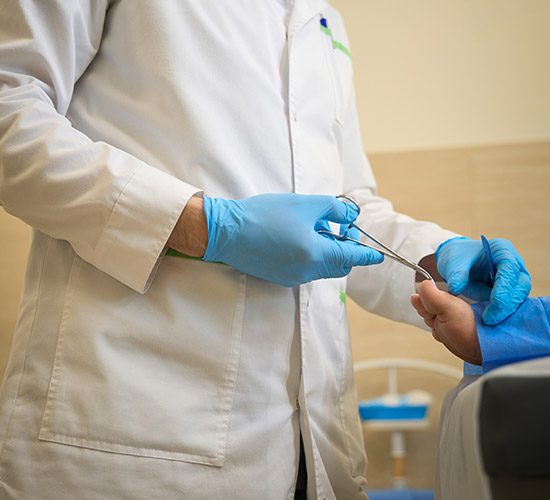
What is Ingrown Toenail Surgery?
Ingrown toenails can often be managed without surgery, particularly when they are treated early. Depending on the severity, treatment may involve carefully clearing the painful nail edge, reducing pressure around the toe and addressing factors such as nail cutting, footwear or recurrent irritation.
When an ingrown toenail keeps returning, remains painful, becomes repeatedly infected or does not settle with conservative treatment, a minor nail procedure may be considered. In many cases, only the troublesome side of the nail needs to be removed rather than the entire nail.
Your podiatrist will assess the toe, your medical history and circulation before recommending treatment. If nail surgery is appropriate, the procedure, expected recovery and aftercare will be explained clearly so you know what to expect.
When might ingrown toenail surgery be considered?
Nail surgery may be considered when an ingrown toenail repeatedly returns, remains painful despite conservative treatment, causes recurrent inflammation or infection, or makes footwear and everyday activity difficult. The decision is made after assessing the nail, surrounding skin, circulation and relevant medical history.
What happens during the procedure?
The toe is numbed with local anaesthetic before the problematic section of nail is removed. In many cases, only the affected side of the nail is treated rather than removing the whole nail. Your podiatrist will explain the procedure and whether treatment to reduce the chance of the problematic nail edge growing back is appropriate for your situation.
Recovery and aftercare
Most people can walk after the procedure, although the toe will need to be kept clean and protected while it heals. You will be given specific dressing and aftercare instructions, and follow-up may be arranged depending on the procedure and how the toe is healing.